PRINCE2® Certification: Why you should take it and how to succeed?
🔎 Are you a project manager looking for a proven method to structure your teamwork effectively?
📈 77% of companies in 2025 will be working without project management software or methods… and will see their projects fail more often.
💡 Don’t know where or how methodology to use? Are you hesitating to take the plunge?
❌ Underestimating the importance of a proven method means risking wasting time and resources and compromising your projects.
Great news: PRINCE2® certification is here to help. Find out how it can transform your approach and optimise the management of your projects!
1. Why is this important?
a. The data behind the reasons
In 2024, more than 71% of projects will not go ahead as originally planned.
Why should this be?
A study reveals that 70% of companies admit to having experienced failure in at least one of their projects, mainly due to a lack of clear management methodology. The absence of rigorous project management not only compromises consistency and adherence to deadlines, but also damages the company’s credibility.
b. Choosing the right working method
So, while I encourage you to take a management course, you still need to find the right method.
Here are the most internationally recognised methodologies:
- PRINCE2® (PRojects IN Controlled Environments) based on clear principles, themes (such as risk management or quality) and a series of standardized processes that adapt to the size and complexity of the projects.
- PMP PMP (Project Management Professional): This methodology is based on the PMBOK (Project Management Body of Knowledge).
- Kanban: Uses a visual task management system to improve productivity and flexibility. It allows you to visualize the workflow and limit the work in progress.

My decision was to go with PRINCE2® for geographical relevance; this methodology is more widely used in Oceania and Europe, areas of the world where I am used to working. PMP certification, while globally recognized and highly respected, is more commonly used in the United States.
2. What is PRINCE2®?
a. The origins
PRINCE® is a methodology developed in the United Kingdom in 1989 by the CCTA (Central Computer and Telecommunications Agency).
Its current version, PRINCE2®, 7th edition, was published in 2023.
There are two levels of certification:
- PRINCE2® Foundation: To understand the basics of the methodology and acquire a common project management vocabulary.
- PRINCE2® Practitioner: To learn how to apply this knowledge in real, complex contexts.
b. Areas of application
PRINCE2® is a general method. As a result, it is highly prized in sectors with demanding organisational requirements. It can be found in IT, finance, construction and engineering.
c.Key components
PRINCE2® places great emphasis on clearly defining the roles and responsibilities of each member of the project team. This distribution implies the notion of cumulative tasks, but also their incompatibility.
While one person may take on multiple roles, providing flexibility to the project, this method ensures that responsibilities are clearly defined, reducing the risk of conflicts and mismanagement.
With this approach, documents are continuously updated throughout the project lifecycle, eliminating the need to waste time on irrelevant activity or meeting reports.
PRINCE2® is further strengthened by its built-in risk management component, which is critical to every project. This methodology focuses on anticipating, identifying, assessing, and managing risks proactively, ensuring that the project team is prepared for unforeseen events without compromising the project’s objectives.
3. What is PRINCE2® methodology?
a. The steps involved: skills acquired
The PRINCE2® training covers the fundamentals of project management according to this methodology. Some of the key topics covered include:
- PRINCE2® principles: 7 principles to apply to all projects such as business justification, learning from experience, defining roles and responsibilities, etc.
- PRINCE2® themes: Change management, risk management, quality management, and other crucial aspects of a project.
- PRINCE2® processes: From the start of the project to its closure, PRINCE2® offers a structured process to follow.
- Customization of PRINCE2®: Learn how to adapt the methodology to different contexts.
b. How difficult is it?
- Vocabulary: at first, PRINCE2® jargon can seem abstract and difficult to relate to concrete situations.
- Structure: you might think that each concept is an entire document. In reality, some information is contained in just a few paragraphs.
c.My answer: create my own teaching tools
To address these challenges, I developed the habit of creating my own PRINCE2® templates.
Why this?
- Putting it into practice gave me a better understanding of the steps involved.
- I was able to visualise important information clearly.
- I was able to integrate and memorise complex concepts effectively.
How?
- By using the official courses and identifying the standard PRINCE2® document formats.
- By reproducing and adapting these formats to the context.
The result?
- I structured my knowledge and skills. This was particularly useful for
- Practitioner certification.
4. Choosing your course
Let’s be honest. PRINCE2® training is dense and demanding. And if, like me, you’ve had to sit through a monotonous, robot-like lecture, it can feel tedious
a.Training providers
What criteria should you take into account?
If a PRINCE2® method is the right solution for you, and you’re determined to take the training, all you have to do is choose the right training provider.
And not blindly! Here are a few points to check to make sure you make the right choice:
- Accreditation: make sure you take an accredited course. This means that it is delivered by an organisation accredited by AXELOS, the owner of PRINCE2®.
- Format: choose the format that suits your learning style.
- Teaching aids: choose a course that offers concrete examples, case studies and mock tests to prepare you for the exam.
- Testimonials and reviews: consult feedback from former students to assess the quality of the course and its exam pass rate for the training format (including the Practitioner pass rate).
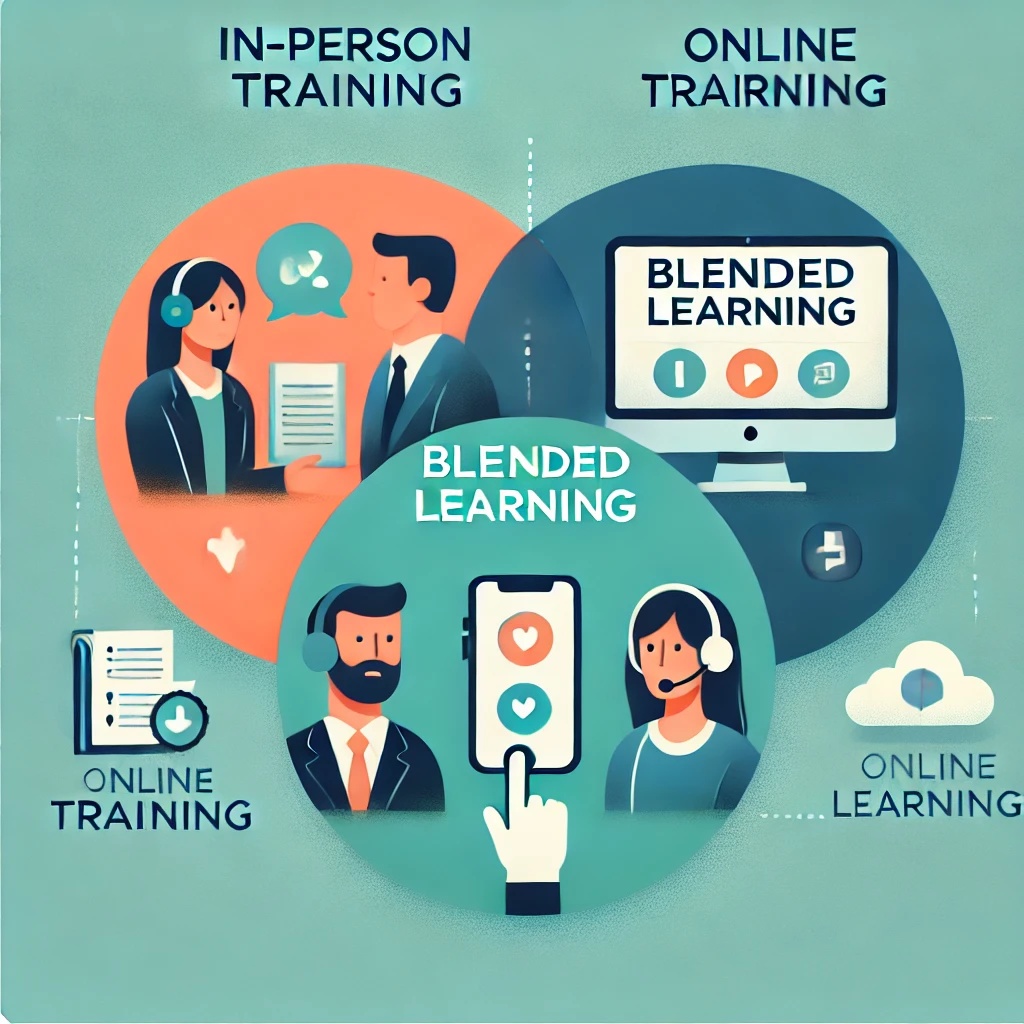
Simply choose the learning method that suits you best:
- Face-to-face: An increasingly rare option since Covid. If you opt for an in-person course, I recommend reading a summary beforehand. PRINCE2® is a dense methodology, and when compressed into just a few days, it can feel overwhelming.
- Distance learning: The best of both worlds—you get access to a trainer without the hassle of travel. Ideal if you live far from major training centers.
- 100% online: Maximum flexibility to choose your own schedule. However, if you’re opting for self-paced learning, be aware that without a CPF personal training account, training providers may offer little added value.
Ultimately, your choice of training format depends on your level of autonomy.
b.PRINCE2® certification
No prerequisites are required to take the course. However, it does come at a cost, as the price of certification is independent. You’ll need to add it to your budget, in addition to the cost of training. Here are the terms and conditions for both formulas:
PRINCE2® Foundation 7th edition
- Cost: €625 (price 2024)
- 60-minute online multiple-choice test
- Minimum passing score: 55%
PRINCE2® Practitioner 7th edition
- Cost : €675 (price 2024)
- 150-minute online multiple-choice test
- Minimum passing score: 60%
Take2 option
- Cost: €150 (price 2024)
If you plan to take both certifications, you should therefore count on a minimum budget of €1300.
Please note: since the 7th edition, the documentation is no longer available to download in PDF format. However, you can consult it online.
5. My personal experience
a.My training program
I realised very quickly that my training was far from what I wanted.
But I persevered and looked for ways to compensate.
I found what I was looking for on the Prince2 Wiki. The content is in several languages, rich, accessible and 100% available. The best part? Every possible answer is commented on and explained. The exam corrections are therefore rich in information.
You can find the equivalent on the Peoplecert site. All in English. However, the mock exams only allow for self-assessment. Without an explanation of the results obtained, learning is less instructive.

b. My personal steps
Once I had gathered useful content, I applied two different strategies :
For Prince2® Foundation, I recorded myself reading the themes, principles and processes with the voice recorder on my phone and listened to it as soon as I could (on the train, in the car, etc.).
For Prince2®Practitioner, I simply repeated the mock exams by learning to find the information in the Prince2 open book, which is allowed during the exam.
Conclusion
I highly recommend taking the Prince2® certification toincorporate a proven methodology that structures a project defines the roles of each team member, and ensures there is no conflict of interest in role distribution.
What I appreciate most is the focus on initializing documents that will be updated throughout the project’s life, rather than wasting time on unrelated activity or meeting minutes.
When choosing a training organization, it largely depends on your level of autonomy in learning. If you decide to take face-to-face training, I suggest reading a summary of the training beforehand. The methodology is very dense and can be overwhelming if condensed into a five-day course.
Looking for a professional? Let’s collaborate to ensure the success of your projects throughout their entire lifecycle.
Want to take it a step further? Boost your company’s performance today by checking out our article on Managing Internal Procedures: Best Practices.
Stay tuned for more articles coming soon!
Maud Cappelle
Is PRINCE2® certification aimed at beginners or advanced users?
PRINCE2® certification is aimed at both beginners and experienced professionals.
Beginners: There are no pre-requisites for PRINCE2® certification, enabling people with no project management experience to acquire a structured and recognised methodology.
Advanced : Professionals who have already managed projects will be able to get more out of the course by more easily making the link between theoretical concepts and their concrete application in real-life situations.
Does the PRINCE2® methodology offer any specific tools?
No, the PRINCE2® methodology does not recommend any specific tool or imposed document format.
It defines a structural framework based on principles, themes and processes, but leaves organisations the choice of tools and media to use.
Flexibility of media: The key PRINCE2® concepts (business case, project plan, risk log, lessons learned, etc.) can be presented in a variety of ways:
- Sections in Word or Excel documents
- Blocks of information in a web tool (Jira, Trello, Monday, MS Loop, etc.)
- User stories or tasks in an Agile backlog
💡 The most important thing is that the information is well documented, accessible and used effectively throughout the project.
What concrete improvements does the PRINCE2® methodology bring to project management?
The PRINCE2® methodology introduces several concrete improvements to project management, particularly by emphasizing key aspects such as the pre-project phase and the clear definition of roles and responsibilities.
Pre-project phase: PRINCE2® places great importance on thorough preparation before the project officially begins. This includes building a solid business case, identifying risks, and clarifying objectives. By ensuring the project is viable and aligned with stakeholder expectations from the outset, this step reduces the risk of failure.
Clear roles and responsibilities: PRINCE2® defines each participant’s role (RACI) and their respective responsibilities. This structured approach streamlines decision-making, enhances communication, and ensures effective resource management throughout the project.
By integrating these principles from the start, PRINCE2® minimizes ambiguity, reduces project drift, and improves coordination among stakeholders.